

Your creams are doing their best, yet your skin still looks uneven. Maybe fine lines and old sun marks catch your eye. A NOON chemical peel in Malta could be the professional step to discuss, once you know what it involves.
Quick answer: A NOON peel uses selected acids to remove damaged surface cells in a controlled way. It may improve dullness, uneven tone, texture and early lines. The choice depends on your skin, and a trained practitioner should apply it. You need an assessment, careful preparation, aftercare and strict daily sun protection.
What is a NOON chemical peel in Malta?
It is a professional treatment that applies an acid solution to the skin. The solution loosens outer layers, so fresher-looking skin can come through.
First, peels vary in depth. According to the American Academy of Dermatology, light peels may need several sessions. Deeper peels bring longer healing and greater risks.
Also, the word “peel” can sound dramatic. However, light peeling is not the same for everyone. Some people see flakes, while others notice very little.
Which concerns can a peel help with?
Peels can help with dullness, uneven tone, rough texture, breakouts and early signs of ageing. BDR lists these among the concerns it assesses for its chemical peels in Malta.
- Dull complexion from surface build-up.
- Uneven tone, including some dark marks.
- Rough texture and fine lines.
- Oily or breakout-prone skin.
Nevertheless, a peel does not lift sagging skin or replace lost volume. Results also fade with time, because skin continues to age.
Which NOON peels exist in the professional range?
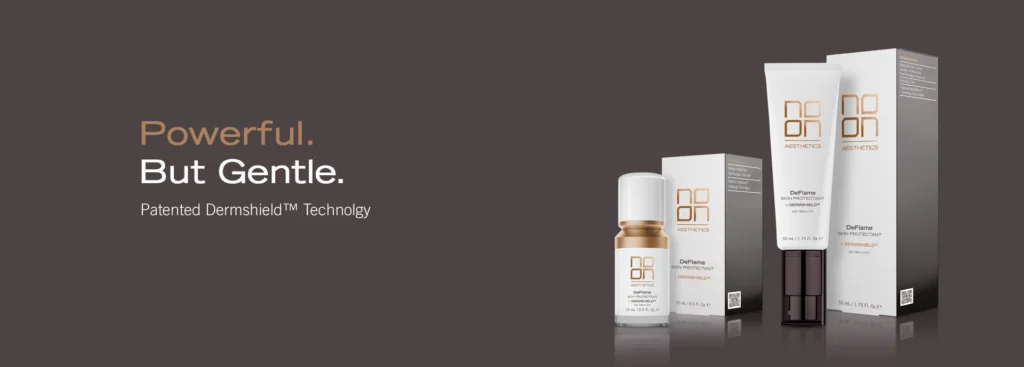
The NOON professional range includes four named peels with different acid blends. Availability can differ by country, so your practitioner confirms what we offer in Malta.
| Peel | Main ingredients | Acid in simple words |
| G-Peel 30 | 30% glycolic acid | A fruit-acid type that works on the surface |
| P-Peel 20 | 20% pyruvic and 20% lactic acid | A two-acid blend |
| S-Peel 20 | 20% salicylic acid | An oil-friendly acid |
| J-Peel Delicate | Salicylic, lactic and citric acid | A three-acid blend |
The NOON product list says each of these includes DermShield technology. NOON presents it as a way to reduce irritation. Still, no peel is free from possible side effects.
Above all, please do not choose a peel by percentage alone. Different acids behave differently. For this reason, a higher number does not automatically mean a better result.
These are professional products. Therefore, a trained practitioner should select and apply them.
What happens during your appointment?
Your visit starts with questions and a skin check, not with acid. BDR describes assessment, cleansing, application and then soothing and protection.
- Assessment: we discuss your goals, skin type and history.
- Cleansing: your skin is prepared and cleaned.
- Application: the practitioner applies the chosen peel for a controlled time.
- Soothing: calming and protective products follow.
During application, you may feel tingling or warmth. Importantly, tell your practitioner straight away if you feel strong pain or burning.
What should you tell your practitioner first?
Share your full health and skincare history before any peel. This information helps your practitioner decide whether to continue, adjust or wait.
- Pregnancy or breastfeeding, or plans to conceive.
- Medicines, especially acne treatments such as isotretinoin.
- Retinoids, acids or other active products at home.
- Cold sores, eczema, wounds or skin infections.
- Previous dark marks or raised scars after injury.
- Recent sunburn, tanning or another procedure.
In addition, darker skin tones need particular care. Without the right experience, pigment changes can occur. So, ask your practitioner about their approach to your skin tone.
Questions before booking? Ask us on WhatsApp. We can arrange an assessment before you decide.
How should you prepare your skin?
Follow the plan your practitioner gives you, often for a few weeks beforehand. Do not add or stop prescribed medicine without medical advice.
NOON offers Pre + Post-Procedure Programs. These travel-friendly kits support skin before and after in-clinic procedures. Your practitioner decides whether a programme suits you.
Preparation also includes sun care. In Malta, plan around beach days, boat trips and outdoor events. Likewise, avoid arriving with fresh sunburn.
Some home actives may need a pause. For example, retinoids and exfoliating acids can increase sensitivity. Ask exactly when to stop and restart them.
What is recovery like?
Recovery depends on the peel, its depth and your skin. Light peels often cause mild redness or flaking for several days.
| Do | Avoid |
| Use gentle, recommended products | Picking or scratching flakes |
| Keep skin moisturised | Scrubs and strong acids until cleared |
| Apply sunscreen every day | Sunbathing and tanning beds |
| Call us about unusual reactions | Make-up before your practitioner allows it |
NOON MultiVit Sun Protector SPF 30 is one daily sunscreen option. Apply it as advised once your practitioner says your skin is ready. Reapply often outdoors, and use shade and a hat too.
What are the risks?
Possible risks include redness, irritation, temporary darkening, pigment changes, infection and, rarely, scarring. Sun exposure and picking can raise some of these risks.
Contact your practitioner if you notice swelling, blistering, itching, burning or a spreading rash. Seek urgent medical help for severe symptoms, such as trouble breathing.
Good aftercare lowers risk but cannot remove it. Therefore, an honest conversation before treatment matters as much as the peel itself.
How does a peel fit with your home routine?
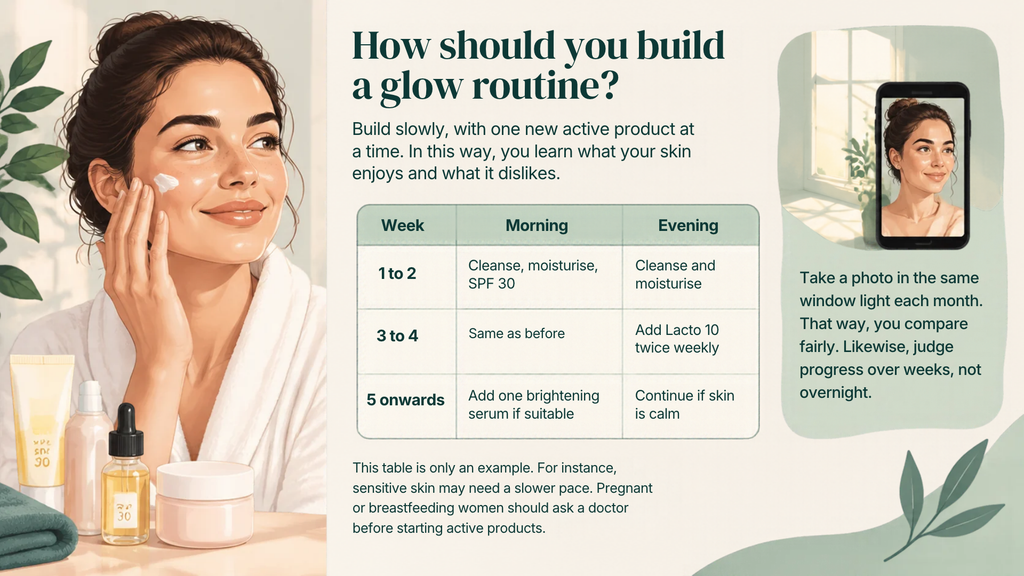
A peel works best as one part of a steady plan, not as a one-off fix. Between visits, gentle cleansing, moisture and sunscreen do the daily work.
Afterwards, your practitioner may suggest when to restart active products. For instance, an exfoliating acid or retinol usually waits until your skin feels settled. Also, avoid adding something new on your own during recovery.
Finally, take a photo before your first session in good window light. Then compare it after your skin has healed. In this way, you judge changes fairly.
When is a peel not the right first step?
A peel should wait when your skin is injured, infected, sunburnt or very irritated. In these cases, calming the skin comes first.
Similarly, an important event next week may not suit a first peel. Give yourself time, since your response is still unknown.
Sometimes home care is the better starting point. Our guides to collagen after 35 and looking older than you feel explain simple routines.
Ready to find out? Book your treatment consultation at BDR Noon Clinic in Birkirkara.
Frequently asked questions
Can I have a chemical peel in Malta during summer?
It depends on the peel, your skin and your sun exposure. Many people prefer less sunny months. If you cannot protect your skin carefully, your practitioner may advise waiting.
Will my skin visibly peel?
Not always. Some people flake for a few days, while others see little change. The amount of peeling does not reliably show how well the treatment worked.
How many peel sessions will I need?
Light peels may require a series, spaced several weeks apart. Your practitioner sets the plan after assessing your skin, goals and response. No fixed number suits everyone.
Is a chemical peel safe during pregnancy?
Do not book a peel without medical advice if you are pregnant or breastfeeding. Tell your practitioner. Often, waiting and using gentle care is the sensible choice.
Your next step
A peel can be a helpful step when chosen well and cared for properly. Still, it is one part of a wider routine. The right plan begins with your skin, not with a product name.
To discuss your options, book a consultation or message us on WhatsApp. We are in Birkirkara.
This article gives general information and does not replace medical advice.