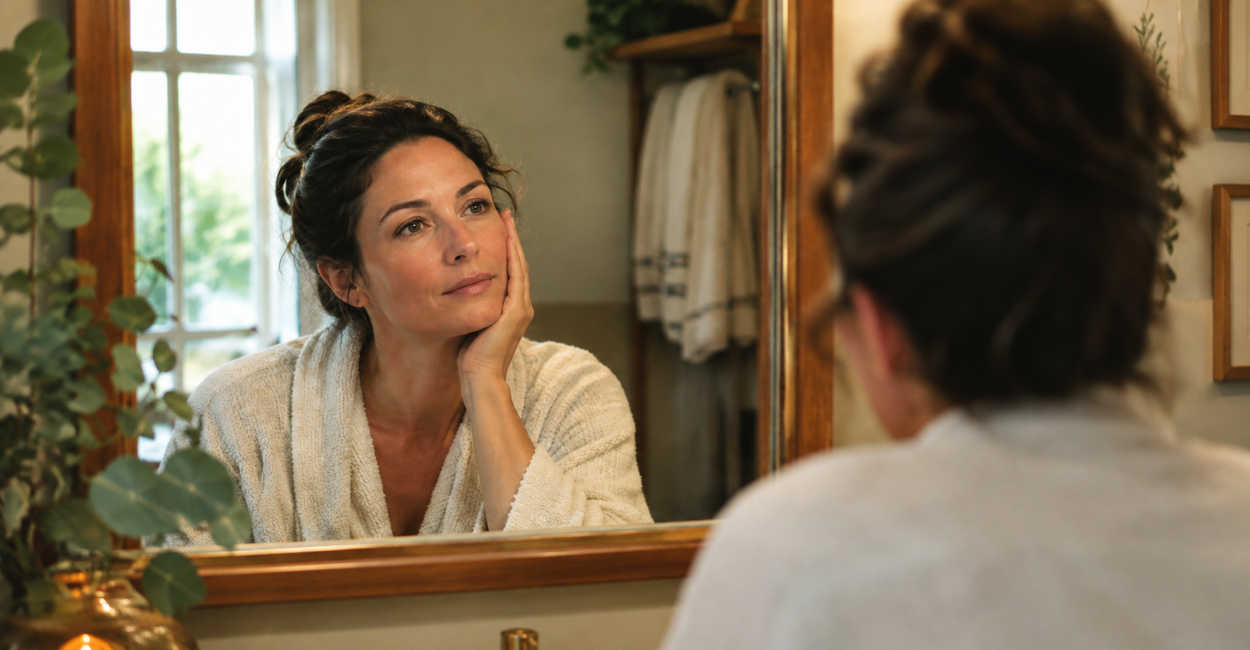


You feel fine, but the photo says otherwise. Your face looks tired, even after a full night’s sleep. If dull skin in Malta has you asking why, look at tone and texture. Wrinkles are only part of it.
Quick answer: A dull complexion often comes from sun-related uneven colour, a build-up of dead cells and dryness. Together, they stop light from reflecting evenly. Fortunately, you can address each one. Daily sunscreen, gentle exfoliation, brightening serums and good hydration can help. A professional should check stubborn or changing patches.
Why do I look older than I feel?
You may look older because uneven colour and rough texture change how your skin catches light. Age in years is only part of the picture.
For example, researchers studied how old people thought women looked. Their twin and population study found that wrinkles strongly shaped perceived age. Sun damage mattered mainly through its link with wrinkles.
Colour matters too. A French study of 298 women compared sun lovers with sun avoiders. Pigmentation signs were closely linked to sun exposure. Researchers from a cosmetics company took part, so read it with that in mind.
In other words, your skin keeps a diary of daily light. Fortunately, you can change what you write in it from today.
What causes dull skin in Malta?
Strong sun, surface build-up and dehydration are three common reasons. Additionally, stress, short nights and smoking can leave your complexion looking flat.
- Uneven pigment: freckles, sun spots or patches break up your natural tone.
- Dead surface cells: they create a rough layer that scatters light.
- Dehydration: skin that lacks water looks tired and shows fine lines more.
- Irritation: too many strong products can leave skin red and flaky.
- Daily habits: smoking and poor sleep rarely help your glow.
Malta adds its own challenges. Summers bring bright sun, sweat, salt water and air conditioning. Meanwhile, winter wind can make skin feel tight.
Which kind of dull do you have?
Your skin usually gives clues, and each clue points to a different first step. Use this table as a guide, not as a diagnosis.
| What you see | Possible reason | First step to consider |
| Brown spots or patches | Sun exposure or hormones | Sunscreen and assessment |
| Rough, grainy surface | Dead cell build-up | Gentle lactic acid |
| Tight skin with fine creases | Dehydration | Moisturiser and gentle cleansing |
| Red, stinging or flaky areas | Irritated skin barrier | Pause strong actives |
| Marks after spots | Pigment after inflammation | Sunscreen and brightening care |
Can sunscreen really make a difference?
Yes, daily sunscreen is the most important habit for protecting an even tone. It helps limit new damage while other products work.
In an Australian randomised trial, 903 adults under 55 took part. Daily users showed 24% less skin ageing after four and a half years. Researchers measured the skin on their hands.
NOON MultiVit Sun Protector SPF 30 suits this daily step. It offers UVA and UVB protection, with vitamins B, C, and E. Apply it generously every morning.
Then reapply at least every two hours outdoors. Also, apply again after swimming or sweating, and check the label for water resistance.
Which NOON products target dullness and uneven tone?
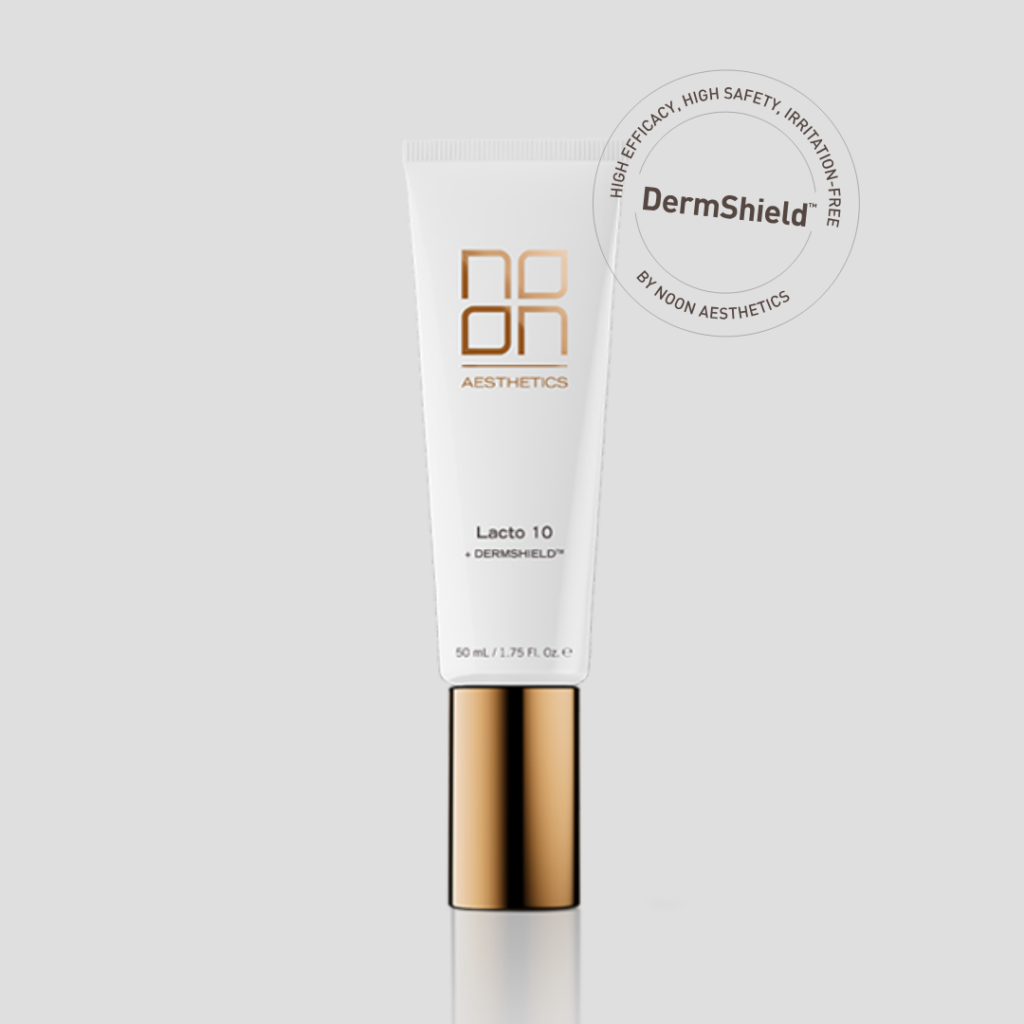
Three NOON formulas address different parts of the problem: texture, patches and overall tone. You do not need all of them at once.
Lacto 10 for rough texture
NOON Lacto 10 contains 10% lactic acid. This acid loosens dead cells on the surface. As a result, skin can feel smoother and reflect light better.
Start a few evenings each week. After that, increase only if your skin stays comfortable. Moreover, acids can raise sun sensitivity, so keep wearing SPF.
TXA-Brightening Complex for patches
TXA-Brightening Complex contains 10% tranexamic acid. It also includes glabridin, a liquorice-derived ingredient, and a form of vitamin C. NOON designed it for targeted use on affected areas.
Pigmentation can have several causes. Therefore, get stubborn patches assessed, especially if they appear during pregnancy or after starting a new medicine.
NAM-Brightening Complex for overall tone
NAM-Brightening Complex contains 20% niacinamide, a form of vitamin B3. It also contains glabridin and hydrating hyaluronic acid. This is a high strength, so patch test first.
NOON also describes its DermShield technology as a way to support comfort. However, any active can irritate some people. Stop if you notice burning or lasting redness.
Unsure which one fits you? Send a short description on WhatsApp. We can help you arrange a skin assessment.
How should you build a glow routine?
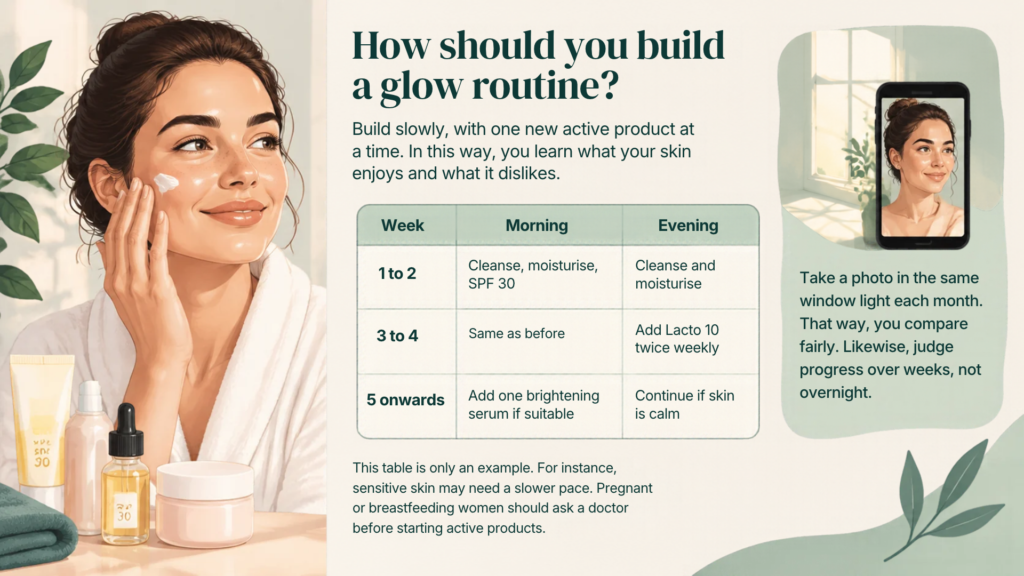
Build slowly, with one new active product at a time. In this way, you learn what your skin enjoys and what it dislikes.
| Week | Morning | Evening |
| 1 to 2 | Cleanse, moisturise, SPF 30 | Cleanse and moisturise |
| 3 to 4 | Same as before | Add Lacto 10 twice weekly |
| 5 onwards | Add one brightening serum if suitable | Continue if skin is calm |
This table is only an example. For instance, sensitive skin may need a slower pace. Pregnant or breastfeeding women should ask a doctor before starting active products.
Take a photo in the same window light each month. That way, you compare fairly. Likewise, judge progress over weeks, not overnight.
Which habits quietly steal your glow?
Small daily habits can undo good products, often without you noticing. Fortunately, most are easy to adjust.
- Skipping SPF on cloudy or winter days.
- Scrubbing hard, which can irritate and darken some skin.
- Mixing many actives at the same time.
- Sleeping in make-up after a late evening.
- Smoking, which speeds up visible ageing.
Drinking water supports general health. Still, a moisturiser is the direct way to reduce dryness on the surface.
When should you see a professional?
See a professional when patches persist, your skin keeps reacting, or you cannot tell what is wrong. Importantly, a changing, bleeding or unusual spot needs prompt medical attention.
A skin assessment looks at your concern, skin type, routine and history. Afterwards, you may receive home care advice, an in-clinic option or both. For example, some people discuss a professional peel.
For related reading, BDR explains sun damage and melasma care in Malta. Our guide to collagen after 35 covers firmness and fine lines.
Want a clear plan? Book your treatment consultation at BDR Noon Clinic in Birkirkara.
Frequently asked questions
Why does my skin look dull in Malta after summer?
Sun exposure can leave uneven colour, while salt, sweat and air conditioning may add dryness. Therefore, restart gently with sunscreen, hydration and light exfoliation once your skin feels calm.
Can dehydration make me look older?
Yes, dry-looking skin can make fine lines stand out for a while. A moisturiser often improves that appearance. However, it will not remove deeper wrinkles or sun spots.
How long before my skin looks brighter?
Hydration can improve quickly, but tone usually takes weeks of steady care. Results differ between people. So, compare monthly photos and keep using sunscreen throughout.
Can I use acids and brightening serums together?
Some people can, but start them separately. Introduce one product, wait, and then add another. Ask a skincare professional if your skin is sensitive or already irritated.
Your next step
Looking tired does not always mean you are tired. Often, your skin simply needs protection, gentle renewal and water. Start with SPF, then choose one targeted step.
If dull skin in Malta keeps bothering you, book a consultation or message us on WhatsApp. We are in Birkirkara.
This article gives general information and does not replace medical advice.